
Paradise Has a Healthcare Blueprint: What Hawaii Knows

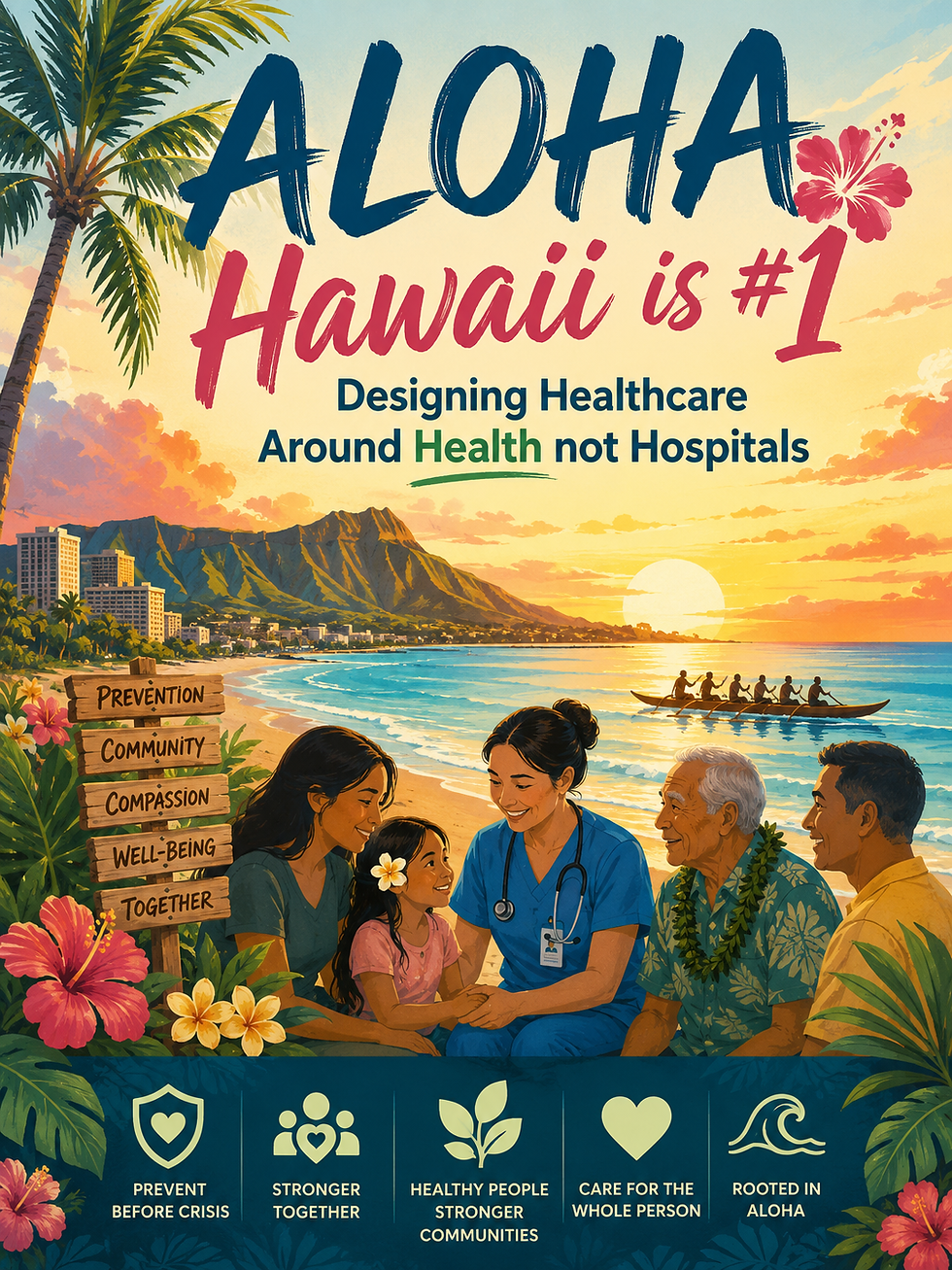
What Hawaii Knows That the Rest of America Hasn’t Learned
When Americans talk about the best healthcare in the country, attention usually turns to famous medical centers, groundbreaking technology, and billion-dollar hospital systems.
Yet year after year, Hawaii rises to the top of national healthcare rankings.
Its success is not built on having the largest hospitals or performing the greatest number of procedures. Hawaii has done something far more powerful: it has created conditions that help people stay healthier before they ever reach the hospital doors. That distinction matters.
The lesson from Hawaii is not that one state has discovered a secret medical treatment. It is that healthcare works better when coverage, prevention, primary care, community support, and public policy pull in the same direction.
Health Insurance Became an Expectation, Not a Luxury
One of Hawaii’s most important decisions came in 1974, when the state passed the Prepaid Health Care Act. The law requires most employers to provide health insurance to employees who work at least 20 hours per week. This policy helped Hawaii build one of the highest rates of employer-sponsored health coverage in the country. Coverage changes behavior.
People with health insurance are more likely to establish relationships with healthcare providers, obtain preventive screenings, manage chronic conditions, and seek treatment before a health problem becomes an emergency. Hospitals also carry less uncompensated care, allowing more resources to be directed toward prevention, coordination, and quality improvement.
Hawaii understood early that access to healthcare cannot begin in the emergency department.
Prevention Is Woven Into the System
The American healthcare system is exceptionally skilled at rescuing people once they become seriously ill. It is far less consistent at preventing that illness in the first place. Hawaii has placed greater emphasis on primary care, screenings, vaccinations, maternal and child health, nutrition, movement, and community wellness.
The underlying philosophy is simple:
The best healthcare outcome is often the crisis that never happens.
Preventing a stroke, identifying cancer early, controlling diabetes, supporting a healthy pregnancy, or helping someone stop smoking may not create the drama of an emergency intervention, but these actions save lives, protect families, and reduce healthcare costs.
Primary Care Serves as the Front Door
Strong healthcare systems do not force patients to navigate a maze of disconnected specialists, urgent care centers, and hospital departments on their own.
Primary care provides a consistent front door. When patients have an established healthcare provider, they are more likely to receive regular screenings, medication management, chronic disease support, referrals, and follow-up care.
Primary care becomes the air traffic control tower of the healthcare system, coordinating movement before confusion turns into crisis.
Hawaii’s investment in community health centers and primary care has helped create more continuity and earlier intervention, particularly for people who might otherwise delay treatment.
Health Happens Outside the Hospital
Medical care is only one contributor to health. Housing, food, income, education, transportation, social connection, culture, safety, and the physical environment also shape whether people become sick and whether they recover.
Hawaii benefits from several lifestyle and environmental factors, including opportunities for year-round outdoor activity, comparatively lower smoking rates, strong family networks, and cultural traditions that often emphasize community connection.
Hawaii also faces serious challenges, including high living costs, rural access barriers, provider shortages, and significant health disparities among Native Hawaiian and Pacific Islander communities. Its top rankings do not mean the system is perfect. They demonstrate that healthcare outcomes improve when the system recognizes the whole person rather than treating a diagnosis in isolation.
Community Is a Health Intervention
Loneliness, isolation, chronic stress, and lack of social support have become major health concerns across the United States.
Hawaii’s concept of ohana, or extended family and community, offers a powerful reminder that human connection is not a sentimental extra. It is part of health.
People who feel connected are often more likely to seek help, follow treatment plans, recover after illness, and maintain healthier behaviors. Social support can influence mental health, stress, sleep, chronic disease, and even longevity. Healthcare systems frequently invest millions of dollars in technology while overlooking one of the most powerful protective factors available: meaningful human connection.
Collaboration Replaces Fragmentation
The broader American healthcare system is often divided into competing territories.
Hospitals, physicians, insurers, employers, government agencies, and community organizations may all work on pieces of the same problem without sharing the same goals, data, or strategy.Hawaii’s smaller size has helped make collaboration more achievable.
Health systems, community organizations, insurers, employers, and public health agencies have been able to align around population health, chronic disease management, preventive care, and quality improvement.
That alignment matters because no single organization can improve community health alone.
A hospital cannot solve food insecurity by itself. A physician cannot fix unsafe housing during a 15-minute appointment. An employer cannot address workforce health without cooperation from healthcare providers and community resources. Progress happens when institutions stop defending their individual islands and begin building bridges.
Why Doesn’t the Rest of the Country Follow?
The honest answer is that much of the United States healthcare system was not designed primarily to produce health. It was designed to deliver and reimburse medical services.
Financial incentives still frequently reward procedures, tests, hospital admissions, and treatments more reliably than prevention, coaching, education, or long-term behavior change.
When prevention works, fewer billable crises occur. That creates one of the strangest contradictions in American healthcare: the system may generate more revenue when people are sick than when they remain well.
Scale is another challenge.Hawaii has approximately 1.4 million residents. The country as a whole includes enormous urban centers, remote rural communities, tribal lands, agricultural regions, and states with dramatically different laws, insurance markets, budgets, and political priorities.
Not every element of Hawaii’s system can be copied and pasted onto the mainland.
But the core principles absolutely can.
The Lesson for Nursing and Healthcare Leadership
Hawaii’s success carries an important message for the nursing workforce.
We cannot build healthier communities on top of an exhausted, sleep-deprived, emotionally depleted healthcare workforce.
Nurse well-being is not separate from patient outcomes. It influences safety, retention, decision-making, communication, absenteeism, engagement, and the overall performance of a healthcare organization. Hospitals measure patient falls, infections, readmissions, staffing levels, and financial performance. They must also begin measuring the workforce conditions that influence those outcomes.
Sleep quality matters.
Stress regulation matters.
Recovery matters.
Connection matters.
Mental health matters.
A nurse’s health should not become visible only after burnout, resignation, illness, or error.
At Power Up Nursing, we believe the future of healthcare requires moving from reaction to prevention, not only for patients, but for the people caring for them.
Wearable technology, biometrics, coaching, resilience programs, workforce data, and community support can help healthcare organizations identify risks earlier and understand which interventions genuinely improve performance and well-being.
The technology is not the destination.
It is a window.
It allows us to see what healthcare has historically failed to measure.
America Does Not Need to Become Hawaii
The rest of the country does not need Hawaii’s geography, population size, or exact legislation to learn from its success.
Every state can strengthen primary care.
Every hospital can invest in prevention.
Every employer can support earlier access to care.
Every healthcare organization can measure workforce well-being.
Every community can build stronger partnerships.
Every leader can stop treating health as something that begins after illness.
Hawaii’s greatest lesson is not that paradise produces better healthcare; It is that better healthcare is created when coverage, prevention, culture, community, workforce well-being, and accountability operate as one system.
The real question is whether we are willing to redesign healthcare around health.
ALOHA!


Comments